

A 16-inch by 35-inch hole in a critical sewer pipe creates both an operational problem and the potential for an environmental crisis. When combined sewer systems fail during storm events, millions of gallons of untreated sewage can flow directly into rivers and bays, triggering EPA violations, environmental contamination, and urgent public health concerns.
The challenge
A city’s wastewater system handles both sanitary sewage and stormwater runoff through shared infrastructure. During normal conditions, all flows are directed to the water treatment plant for processing. However, during large rain events, the system's capacity can be exceeded, requiring combined sewer overflow to be diverted to retention basins rather than overwhelming the treatment plant.
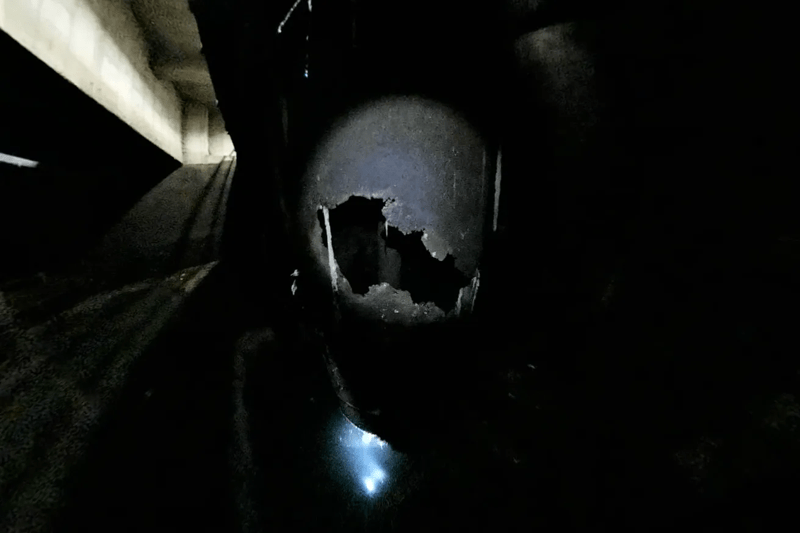
The system's effectiveness depends entirely on the structural integrity of the transfer piping. The city's combined sewage pumping station featured a critical 48-inch carbon steel pipe, installed in the early 1980s, that transferred overflow from the pumping station to retention basins. This pipe was essential to preventing system overload during major storm events. After more than 40 years of continuous service in a highly corrosive environment, the carbon steel pipe developed extensive deterioration. The failure manifested as massive corrosion holes measuring 16 inches by 35 inches, making them large enough to compromise the entire system's functionality.
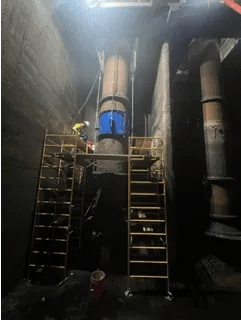
The compromised pipe could no longer reliably divert excess flow to retention basins during storm events, creating system inefficiencies. Without proper overflow capacity, large rain events threatened catastrophic failure of the water treatment plant, which was not designed to handle the combined volume of normal flow plus stormwater surge.
The solution
The repair environment presented extraordinary challenges that eliminated many conventional repair approaches. The damaged pipe section was located in a 40-foot deep wet well, 18 feet off the floor level where maintenance personnel could access it.
The system maintained 14 to 18 inches of raw wastewater at floor level continuously, creating hazardous working conditions and requiring specialized safety protocols. The early 1980s design featured complicated piping configurations that limited access and made traditional repair methods impractical. The work required scaffolding and gantry cranes for equipment positioning, with limited maneuvering room in the wet well environment. The repair solution needed to maintain 125 psi pressure rating to ensure reliable performance during peak flow conditions.
Traditional pipe replacement would have required extensive system shutdown, excavation in the confined wet well space, and removal of the failed section, all while maintaining some level of sewage handling capability. The timeline and complexity of such an approach made it untenable for a system serving an entire city.
The solution
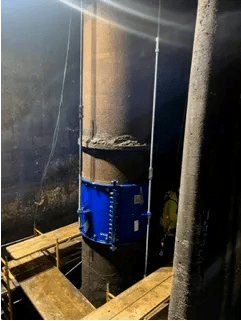
The city selected the Smith-Blair 675 Split Encapsulating Fitting as the optimal solution for this emergency repair. This specialized product is designed to seal large structural failures in existing pipe without requiring pipe removal or extended system shutdown.
The fitting's split construction allowed installation around the existing damaged pipe without requiring pipe removal, dramatically reducing project complexity and duration. The fitting completely encapsulates the damaged section, creating a new structural envelope that isolates the corrosion holes and restores full system integrity.
The result
The Smith-Blair 675 Split Encapsulating Fitting installation was completed successfully, fully restoring the integrity of the city’s critical combined sewer overflow system. The repair eliminated the immediate environmental threat and regulatory exposure while establishing reliable long-term performance.
As municipalities confront aging wastewater infrastructure, combined sewer systems in older urban areas face tightened environmental regulations tighten, and climate change brings more frequent extreme weather events, the ability to perform emergency repairs in confined, hazardous environments while maintaining system operation will be essential to protecting both public health and natural waterways.