

A large timber sawmill in British Columbia depends on reliable water infrastructure for both production operations and fire prevention systems. The facility's water supply comes from an AWWA C301L prestressed concrete cylinder pipe (PCCP) installed in the late 1960s, part of a utility network serving extensive water distribution and irrigation commitments across the region.
The challenge
During routine maintenance, utility operators discovered they could not exercise a critical valve on the system. When inspecting the valve, crews discovered a suspect 50-year-old tapping sleeve on PCCP concrete cylinder pipe. The sleeve's condition raised serious concerns about structural integrity, particularly given recent catastrophic failures on PCCP in Canada.
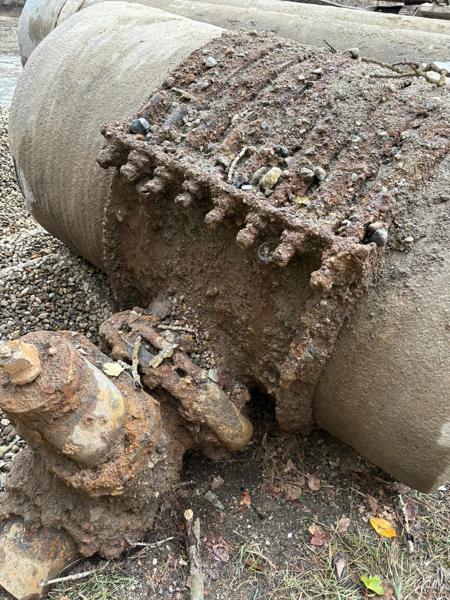
The sawmill could not afford the lost production due to downtime, so the utility needed to eliminate this potential failure point while maintaining uninterrupted service to the business. The utility made the proactive decision to remove and replace the compromised section, but the project would require extensive planning to execute successfully.
The solution
The project began a year earlier when Dave Brewer, Director of Sales at Utility Supply (West) Corp, presented a technical paper at an industry conference on concrete pressure pipe repairs. That presentation initiated a collaborative relationship with the utility, leading to multiple workshops and detailed execution planning.
The utility planned to replace the at-risk tapping sleeve with a new 36-inch steel pipe section. They selected Xylem’s Smith-Blair 935/936 spigot adapters to ensure consistency with the existing PCCP joints. This would create a seamless and uncompromised transition between the existing pipeline and the repair.
However, after excavating the pipeline, field measurements revealed the existing pipe ran smaller than engineering specifications indicated. One connection would be very tight while the other would have excessive clearance.
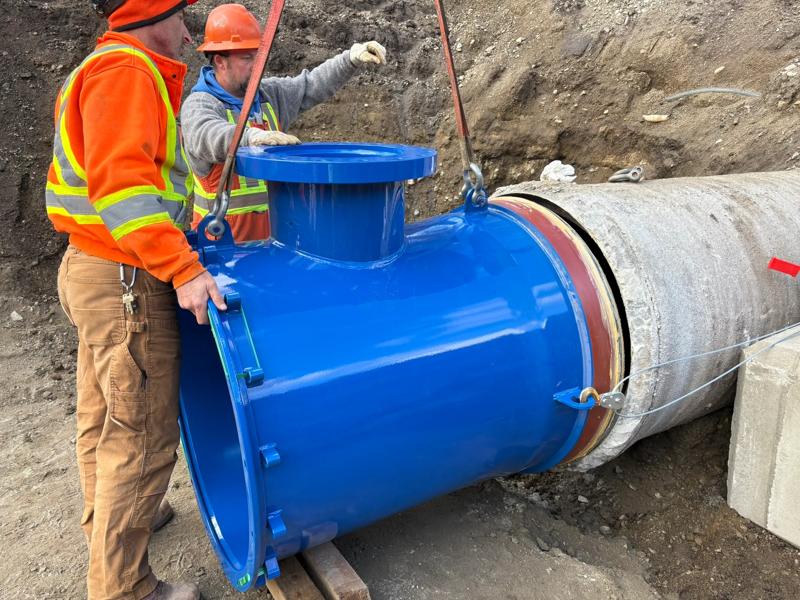
Smith-Blair's engineering team provided critical real-time support, performing rapid calculations to assess the situation. This ability to make informed, dynamic decisions on-site proved essential to project success.
A second solution
With the line dewatered and access available, the repair created an opportunity to inspect about 3 kilometers of adjacent pipes. Xylem deployed the PureRobotics® platform, which uses a high-resolution camera and electromagnetic technology to provide comprehensive data on the pipeline’s internal condition and structural integrity
Additionally, Smith-Blair customized the 935/936 adapters, integrating 16-inch inspection ports on top. These ports were sized and positioned to serve as permanent access points for Xylem’s PipeDiver® inspection platform.
The results
The utility eliminated a significant failure risk on a transmission main and gained valuable condition data to support long-term asset management. The integrated inspection ports ensure future inspections can be performed without excavation or service interruptions.
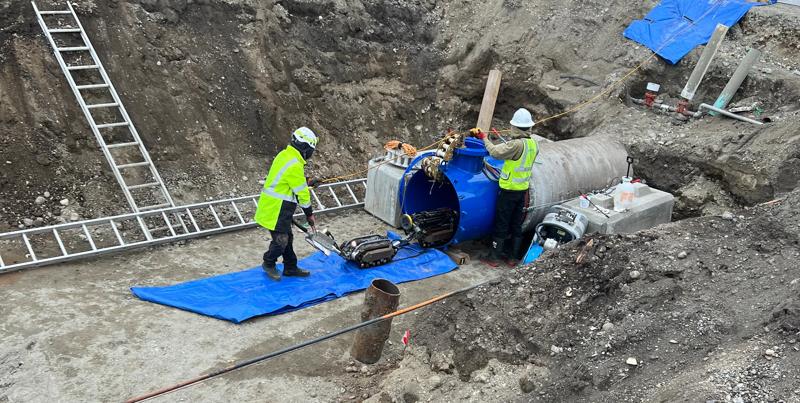
This project exemplifies the power of proactive planning, collaboration, and innovative engineering in addressing aging infrastructure challenges. By using custom spigot adapters and advanced inspection solutions, the utility turned a critical risk into an opportunity to enhance pipeline reliability and ensure future resilience.