

One-step crystallization technology for ZLD and MLD industrial wastewater
The Vacom One-Step ZLD system helps industrial facilities meet zero liquid discharge (ZLD) and minimum liquid discharge (MLD) requirements.
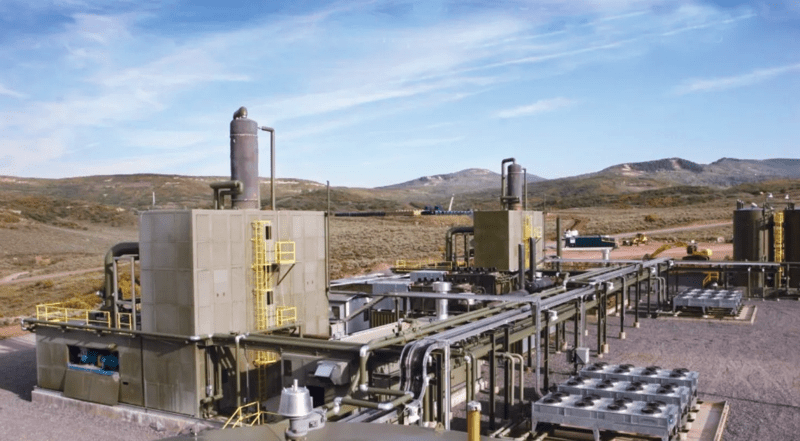
Regulations and requirements are becoming more stringent in defining the compliance for industrial wastewater discharge. Certain processes are now demanding zero liquid discharge (ZLD) or minimum liquid discharge (MLD) as a process requirement. One technology that can meet these requirements is crystallization technology such as the Vacom one-step ZLD system.
Crystallization technology is used as the last step or among the last steps in industrial wastewater treatment depending on the required treatment goal. It uses evaporation to separate salts and other solids from the brine effluent from the treatment process. In a true zero liquid discharge (ZLD) application the water would evaporate and the salts/solids would be sent to a destination such as reuse or landfill.
Depending on the water chemistry the separation of solids and water may not be complete. Any remaining brine is recirculated through the treatment system for retreatment or reuse. The results of this recirculation process would be considered minimum liquid discharge (MLD).
A crystallization system which is creating MLD based on water chemistry can be configured with additional systems to achieve true ZLD. The specific systems used are determined by the application and the solid concentrations in the water. Examples of follow-on systems include reverse osmosis (RO), ultrafiltration (UF) or nanofiltration (NF).
The value crystallization brings to an application is the ability to meet effluent requirements, reduce landfill and provide water reuse.
Markets in which crystallization technology is typically found include:
- Battery recycling
- Chemical processing
- Coal-fired power generation
- Leachate
- Lithium Recovery
- Metals machining/finishing
- Metals recycling
- Oil and gas extraction
- Refining
- Textiles
How crystallization works:
While an evaporator system aims to concentrate a liquid stream into a concentrated brine, a crystallizer’s goal is to create salt crystals and extract solids. Both technologies heat a solution until water vapor is liberated from the liquid stream whether it is wastewater or a process liquid. As water vapor is removed, the resultant concentrate increases in dissolved solids. At some point the concentration of the dissolved solids will increase to a level that exceeds the capacity of the water to keep the dissolved solids in solution. This process is known as supersaturation followed by precipitation. Once a solution is supersaturated, a small crystal (nucleation) will from in the liquid and then begin to grow. The crystals, also called precipitate, are balanced within the saturated solution, meaning that the precipitation of salts will stop once the liquid returns to its maximum saturation point.
For example: at 20oC, a pure sodium chloride solution will be saturated at approximately 360,000 mg/L. If the solution is supersaturated to 390,000 mg/L through heat and/or pressure, precipitate will form and create approximately 30,000 mg/L of crystallized salts, and when the solution returns to 20oC, it will once again be saturated at a concentration of 360,000 mg/L.
Traditionally, evaporator systems are more energy efficient, but, due to their mechanical design, are limited to operate below the precipitation point of many salts. This is because of the concern of scaling and fouling of heat exchange surfaces. Crystallizers, on the other hand, traditionally use more power, but their mechanical design is such that they account for precipitation to occur in the system and are designed to remove the precipitate.
The Vacom one-step ZLD system is specifically designed as an evaporator & crystallizer system in one. The system uses mechanical vapor recompression technology to reduce overall operating costs, but it also employes high speed circulation and a mechanical design that prevents build up of scale forming precipitates. The system can be operated either as an evaporator or crystallizer to meet the needs of the specific application and treatment goals.