

Customer-driven innovation in pharmaceutical water generation
Redefining water system design for performance, compliance, and scale
Pharma manufacturers are being squeezed from all sides: tighter validation timelines, rising capital costs, and increasing regulatory scrutiny. Yet one critical system hasn’t kept up: water generation.
Water for pharmaceutical manufacturing must keep pace with Global Pharmacopeia Standards and stringent regulatory requirements. A breakdown in water generation compliance, consistency, or efficiency can cause unacceptable process shutdowns and commercialization delays.
Xylem has a long history of serving the pharmaceutical industry’s water needs. For more than 100 years, Xylem has been solving pharma water purification problems faced by our customers. That experience has made one point clear: technical performance alone is no longer enough. Users also need systems that fit modern project schedules, reduce service burden, and support compliance in a more streamlined way.
For that reason, Xylem developed MemGEN™, a new standard pharma water generation solution. The development began with a close examination of customer priorities, and the result was a system shaped by direct user input and a practical assessment of how water generation systems can best meet challenges of the rapidly growing pharma industry.
Listening to the market
As part of the MemGEN development process, Xylem met with leading customers to get their feedback on current challenges with pharmaceutical water management. Those conversations revealed a consistent set of concerns.
The most frequently cited issue was long lead times for ordering and delivery. Such delays can strain project schedules and make it harder to align water system installation with broader facility or production timelines. In regulated environments, such delays can affect startup, validation, and operational readiness, or even cause missed commissioning deadlines.
Rising costs that cause blown budgets was also a big concern. Customers need systems that maintain high standards for quality and compliance without unnecessary cost escalation. The need for system maintenance and aftermarket parts also contribute to the rising overall cost of operations.
A third recurring concern was maintainability - those service headaches that never go away. Customers want systems that are easy to access and service, which can help reduce downtime and support more predictable long-term performance.
Customers also noted a troubling underlying issue: the number of available configurations for pharma water systems had grown dramatically over the years, reaching into the thousands. Excessive options were causing longer lead times, higher manufacturing costs, and more complicated training and service.
These challenges don’t just create inconvenience. They delay facility startup, increase validation risk, and lock operators into higher lifetime costs.
Translating feedback into design goals
The development of MemGEN was guided by a clear response to these customer needs while maintaining a risk adverse mindset – Xylem wanted to provide what our partners were looking for, without sacrificing quality or quantity of water.
The first design objective was to standardize and streamline the system wherever possible. By reducing unnecessary complexity and focusing on a more disciplined configuration strategy, Xylem aimed to shorten turnaround times and gain better control over production cost.
A second goal was to make the system easier to maintain and service. This meant designing with serviceability in mind rather than treating maintenance as a secondary consideration. The approach required attention to physical access, component layout, documentation, and the overall user experience of operating and servicing the system.
At the same time, Xylem wanted MemGEN to include advances in materials, instrumentation, controls, software, and connectivity. The goal was not to add technology for its own sake, but to select updates that show clear value, such as improved efficiency, reliability, sustainability, and compliance while remaining practical from a cost standpoint.
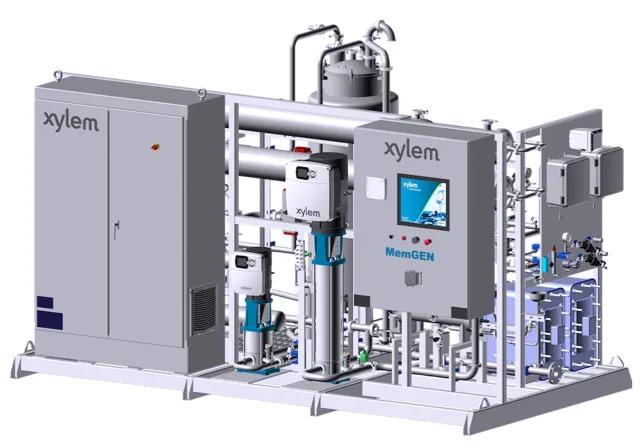
3D model of the pre-engineered MemGEN water generation solution
A structured development process
To ensure MemGEN delivers real-world value, the system was developed and tested alongside existing Xylem customers.
Internally, the company conducted a thorough review of available technologies and materials. Each option was evaluated for performance potential as well as its impact on customer operational efficiency, service, compliance, and cost.
Cost-benefit analysis was an important part of this effort. Potential enhancements were assessed according to the value they added relative to the cost they introduced. This helped ensure that design decisions supported overall system improvement without driving unnecessary expenses.
Customers were not limited to an early advisory role. Xylem involved them throughout multiple stages of development, including evaluation of technologies and materials, system design, and system testing. That participation helped align the final system more closely with real application needs. It also created a practical feedback loop for confirming whether design choices improved usability and performance in ways that mattered to end users.
Functional outcomes of the MemGEN platform
MemGEN delivers practical, measurable improvements:
- Faster deployment through standardized configurations
- Lower service burden with improved system access and layout
- Improved controls for easier operation and flexibility
- Enhanced instrumentation for improved reliability and service life
- Streamlined compliance through integrated digital recordkeeping aligned to 21 CFR Part 11
Its connectivity and software features simplify setup, compliance support, and easier management of system information. Pharma water generation systems are expected to do more than operate reliably; they also need to integrate into a broader digital and regulatory environment.
Configuration improvements allow more efficient use of facility space and easier ongoing maintenance and servicing. By simplifying how the system is configured, complexity that can affect installation and service burden is reduced.
In addition, the materials and core technologies support pharma water quality requirements for Purified Water (PW) and membrane generated Water for Injection (WFI). They also support sustainable operations, accuracy, reliability, and controlled costs. These choices affect not only technical performance, but also long-term usability. Better material and technology selections can improve robustness, reduce service challenges, and contribute to more efficient operation over the life of the system.
Xylem also conducted in-house testing of MemGEN and outside testing by established customers. This combined testing approach made it possible to verify performance internally while also capturing practical feedback from users in real-world conditions.
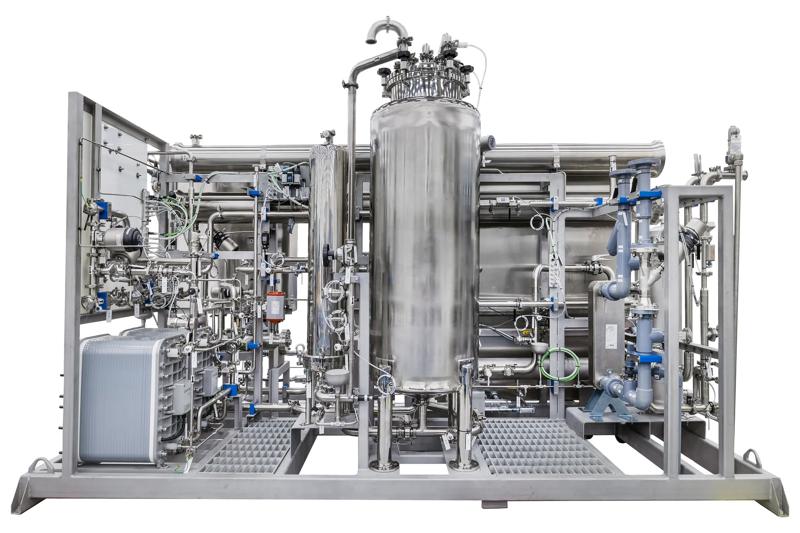 The MemGEN solution with clear service areas for ease of maintenance
Early market response
The launch of MemGEN was eagerly greeted by key stakeholders in the pharma industry. Early adopters and engineering firms have responded strongly to MemGEN:
- Described as “an especially compact design without compromising service access or quality”
- Recognized for ease of use and improved serviceability and safety
- Strong interest in integrated 21 CFR Part 11-compliant digital logging
- Engineering firms positively noted the reduced system footprint and the stainless steel’s hygienic appearance.
Another notable area of interest is the system’s compatibility with Xylem’s Sophis™ digital services, the company’s smart water system management platform. The ability of MemGEN to integrate with digital service tools adds value for users seeking improved monitoring, documentation, and lifecycle management.
Xylem customers are already requesting pricing, suggesting that the platform is generating practical commercial interest in addition to technical approval.
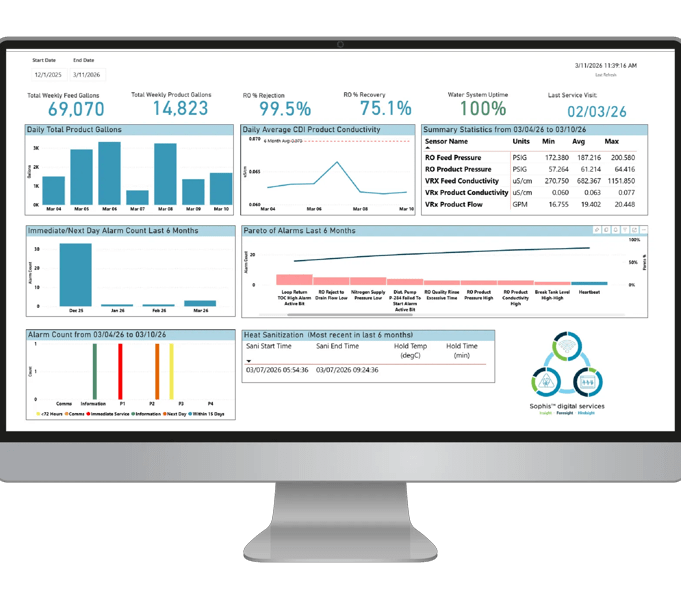
Sophis digital services provides real‑time performance visibility and operational insights
The MemGEN advantage
MemGEN represents a shift away from over-engineered, slow-to-deliver water systems toward a platform built for speed, simplicity, and lifecycle performance. For pharmaceutical manufacturers and engineering firms under pressure to deliver faster and operate more efficiently, that shift is no longer optional.
The development of MemGEN illustrates how customer-driven innovation can produce meaningful technical and operational improvements in water generation systems. By listening closely to users, identifying the root causes of cost and delay, and involving customers throughout development, Xylem created a system designed to address current market realities rather than long-held assumptions.
For pharmaceutical manufacturers, the benefits are practical:
- Easier ordering and faster delivery
- More efficient operation, maintenance, and service
- Reliable compliance support
- Greater sustainability
- Improved long-term value
In a market where technology, regulation, and operating expectations continue to evolve, this kind of structured, collaborative design approach is increasingly important.
Article contributors:
Gary Zoccolante, Technical Director for Plymouth Rock Water Consultants
Gary Zoccolante has over 45 years of experience in pharmaceutical water systems, including design, operation, and troubleshooting. He spent more than 35 years as Pharmaceutical Technical Director at Evoqua Water Technologies (now Xylem) and contributed to the development of technologies such as reverse osmosis, deionization, and distillation. Zoccolante has been deeply involved with ISPE, is a member of several committees and has contributed to developing pharmaceutical water courses and good practice guides. He has authored and co-authored many papers on pharmaceutical water production and system operation and maintenance, and holds several patents related to pharmaceutical water processes.
Josh Hawley, Product Manager and Senior Training Specialist, Xylem
Joshua Hawley is a Product Manager and Senior Training Specialist at Xylem Water Technologies, overseeing the Pharma product lines and supporting high-purity water systems. With over two decades of experience in the industry, he has specialized in areas such as system commissioning, process development, controls, and technical troubleshooting. He holds multiple advanced certifications in high-purity water treatment and reverse osmosis from David H. Paul.
Mark Schultz, Director of Customer Vertical
Mark Schultz started in the water industry in 1982 with initial experience in municipal Reverse Osmosis, Seawater Desalinization, and Industrial Applications. At Xylem for 35 years, Mark has served in Direct Sales, Sales Management, and Vertical Market Management roles. He has specialized in the Pharmaceutical and Consumer Products markets for most of those 35 years and much of his time has been spent in developing and maintaining key customer relationships.
Madison Byrant, Sr. Pharmaceutical Business Development Manager, Xylem
Madison is a dedicated member of ISPE with over six years of experience in the water industry. She has focused on pharmaceutical water for most of her career and brings expertise in ensuring compliance and life cycle support for water systems critical to the pharmaceutical industry.