

Looking back to move forward: the value of historical pipeline data
Assessing pipeline condition and understanding how it changes over time is critical to maintaining safe, reliable infrastructure. A single inspection provides a snapshot of pipeline health. It’s through recurring inspections that utilities can confidently track deterioration. By understanding a pipe’s deterioration rate, utilities can make smarter decisions about where and when to invest in maintenance and upgrades.
The technology dilemma
Inspection technologies are constantly improving. New tools deliver higher resolution or detect a wider range of threats. Ultrasonic tools, for example, can identify changes in wall thickness that electromagnetic tools might miss. Engineers are also designing tools that are easier to get in, through, and out of pipelines with less disruption and operational risk.
However, adopting new technology makes it more difficult to compare the latest inspection results with past data. This blog explores tradeoffs utilities face between embracing new inspection tools and analyzing historic trends.
The hidden value in historical trends
Pipeline inspections generate massive amounts of data — up to millions of signals per hour. Expert analysts translate this raw signal data into meaningful information, like the size and location of wall loss, wire breaks, and other pipeline defects. Comparing inspection results over time shows the progression of defects that, if left unchecked, could lead to a pipe failure.
The most accurate way to track deterioration is to compare raw signal data rather than reported results. Using the same technology for each inspection simplifies this process. It allows analysts to directly compare signals and more easily distinguish actual deterioration from measurement variations. By matching signals, analysts can also look at past results through the lens of new information and experience.
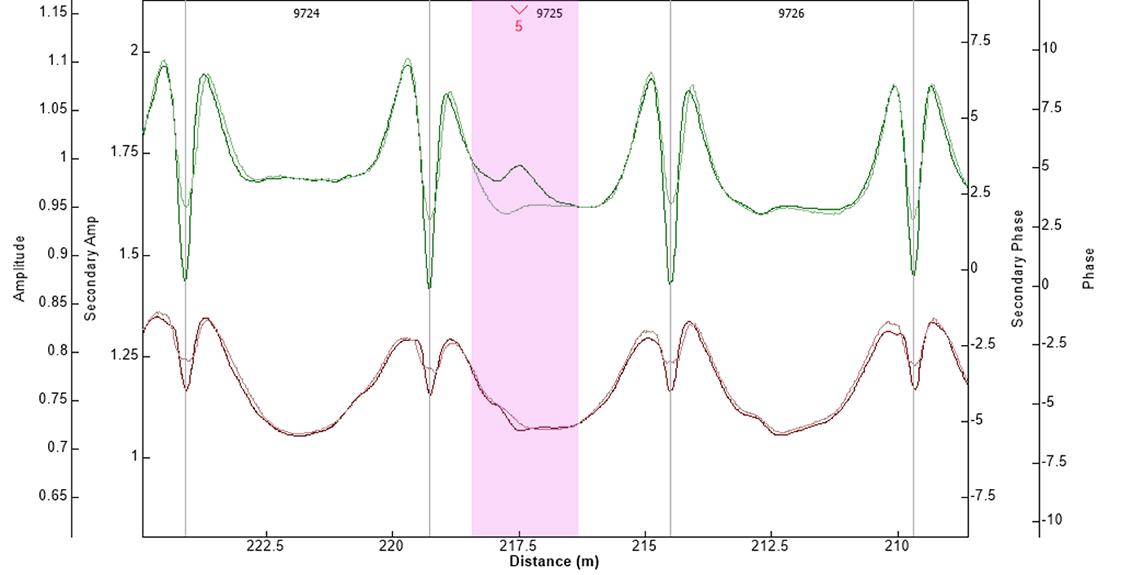
Comparing data from two PipeWalker™ inspections of a 90-inch embedded cylinder pipeline shows a new distress region on the barrel of pipe 9725.
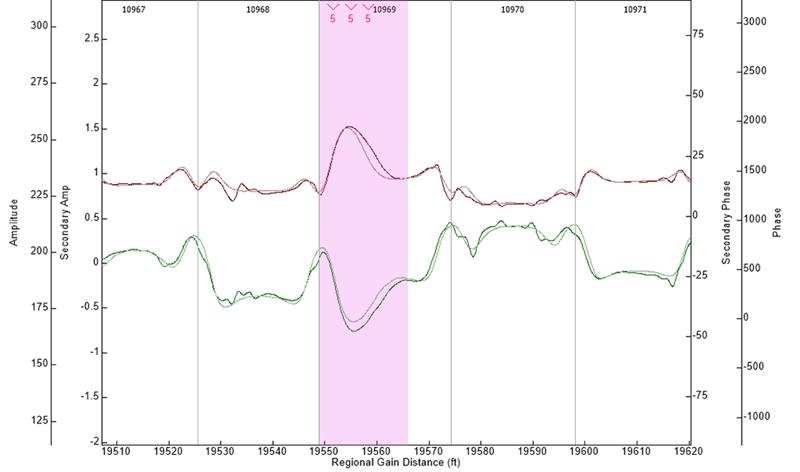
Comparing data from two PipeDiver® inspections of a 60-inch embedded cylinder pipeline shows distress growth in pipe 10969.
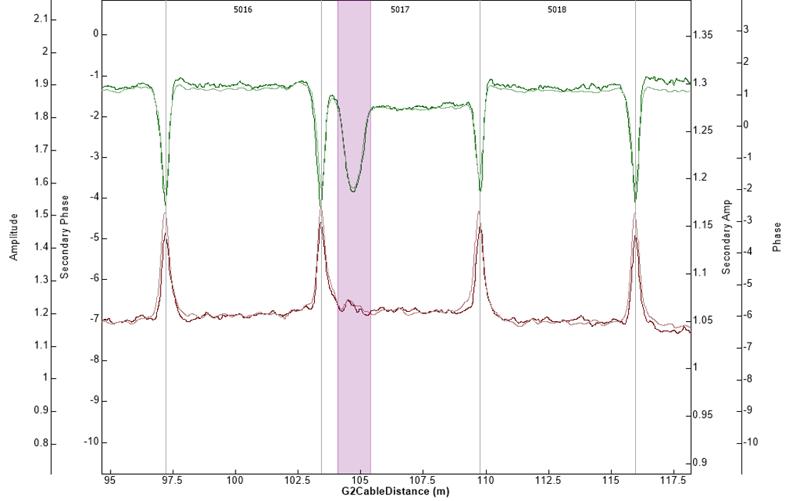
Comparing consistent datasets reinforces that the anomalous signal in red is the result of pipe characteristics rather than deterioration.
When utilities switch inspection tools, comparing the results becomes more complex. Signal data is affected by multiple factors, from sensor resolution to tool size and speed. However, with a strong database of field validations confirming the size and location of reported deterioration, analysts can correct for these differences and make meaningful comparisons.
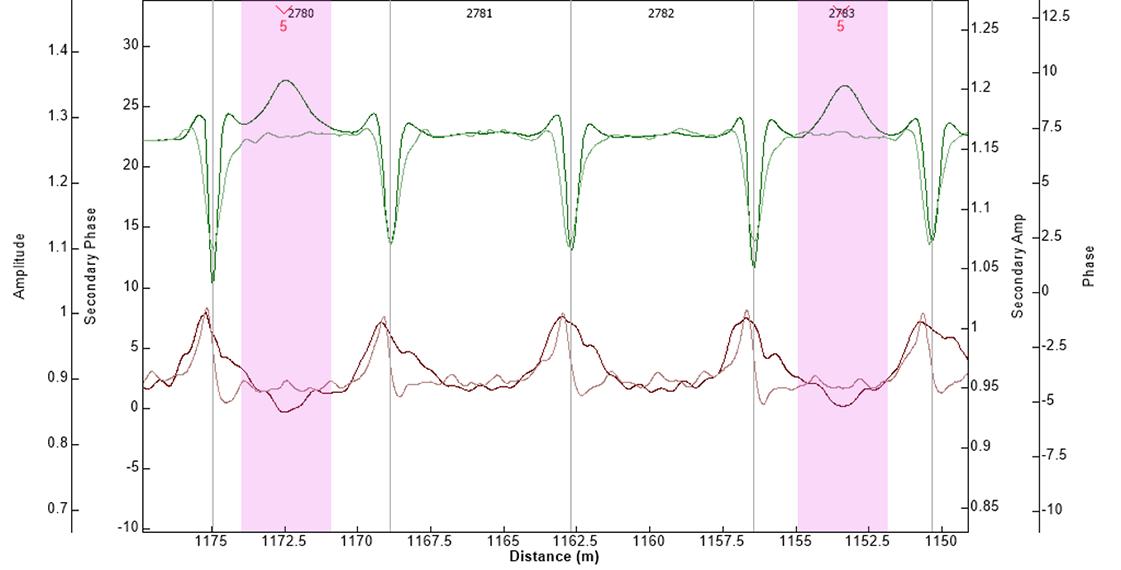
Transitioning between inspection tools presents challenges maintaining data comparability, as shown in this comparison of PipeDiver and PipeWalker results. The analysis highlights new distress regions in the barrels of pipes 2780 and 2783. The comparison is possible using Xylem’s extensive validation data and library of calibration curves to help bridge the differences between inspection technologies.
How past data unlocks smarter decisions
Establishing accurate degradation trends is the foundation for predicting future pipeline conditions and estimating remaining useful life. With this information, utilities can forecast future maintenance needs and multi-year capital expenditures with greater confidence.
This means scheduling repairs, replacements, and reinspections at the right time, while keeping the risk of leaks and breaks in check. A clear understanding of degradation trends eliminates the need for conservative estimates that lead to unnecessary excavations and costly premature pipeline replacements.
A decision framework for asset managers
Here are several factors to evaluate when considering whether to use new tools on pipelines with historical inspection data.
Dominant failure modes
What are the most significant risks to your pipeline’s integrity? When current tools effectively detect critical threats, the benefits of using the same technology can outweigh those of switching.
Deterioration tracking vs enhanced detection
Deterioration tracking helps you focus on what matters most: whether critical defects are growing over time. Establishing accurate deterioration patterns is often more valuable for asset managers than detecting less critical issues with new technology.
However, enhanced tool resolution is necessary to protect critical pipelines in some cases. For a prestressed concrete pipeline that cannot fail, for example, continuous monitoring provides a more detailed and timely understanding of pipe condition than recurring inspections.
Supporting long-term planning
Switching inspection technologies can hinder predictive analytics that utilities rely on to optimize long-term planning. It can take multiple reinspection cycles over years to establish a new baseline and identify emerging trends. Without the context of historical degradation data, even the most advanced inspection tools can fall short in supporting long-term strategies.
Balancing innovation with predictive power
Advances in inspection technology have helped utilities shift away from reactive pipeline management. With consistent datasets across multiple inspections, utilities can do more than prevent the next failure. They can confidently predict future pipeline conditions and make informed decisions about capital investments and operational risk.
As utilities look to the future of their pipeline management programs, they must balance the predictive power of historical datasets with innovation. Some pipeline threats warrant new assessment approaches, and innovation can help utilities expand their programs to new pipelines. By combining the strengths of innovation and historical data, utilities can build a stronger, more resilient pipeline management program.